Streaming vs Batch Output Delivery Trade-Offs in Agent Systems
Streaming and batch aren't settings—they reshape how agents reason about data and handle state.
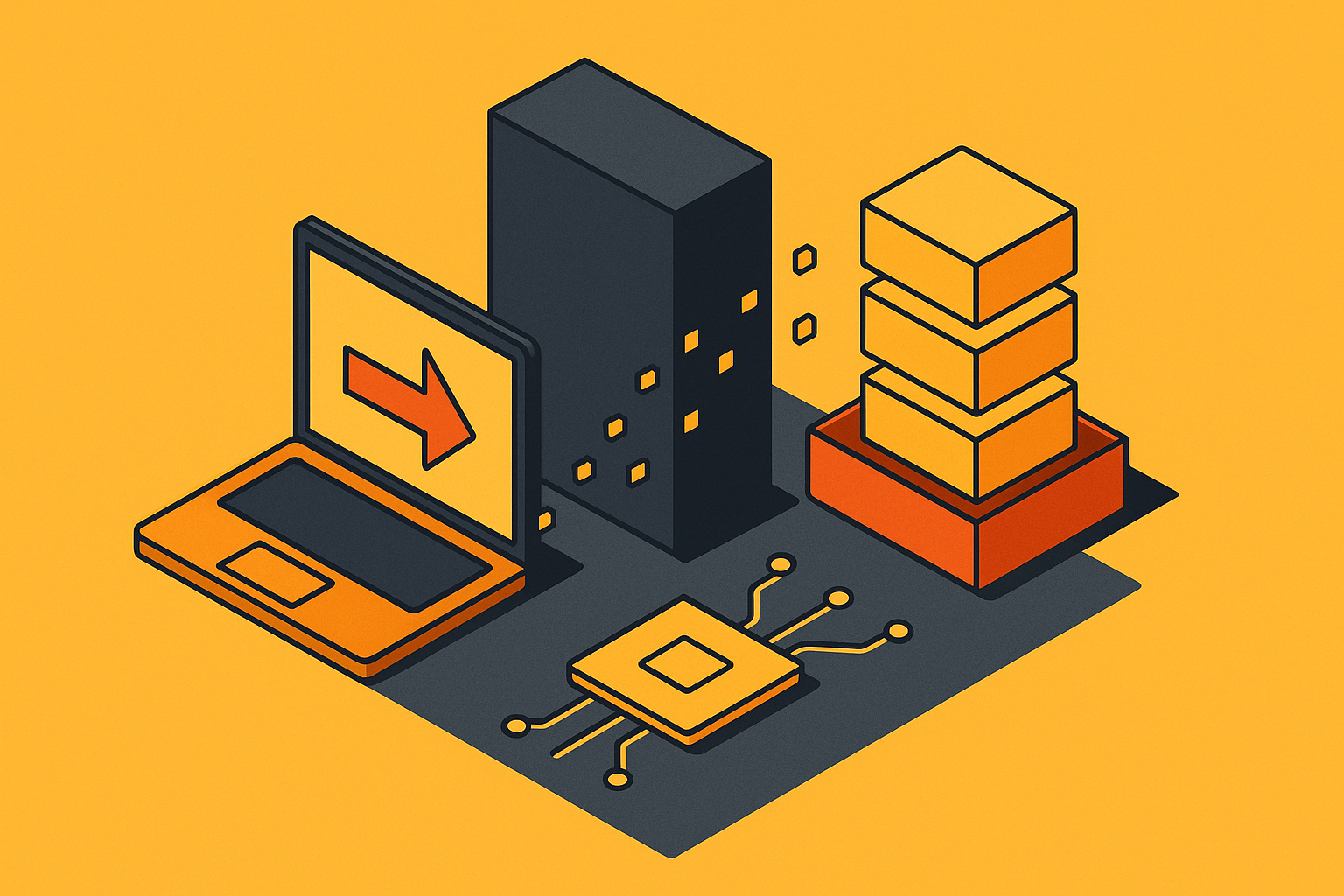
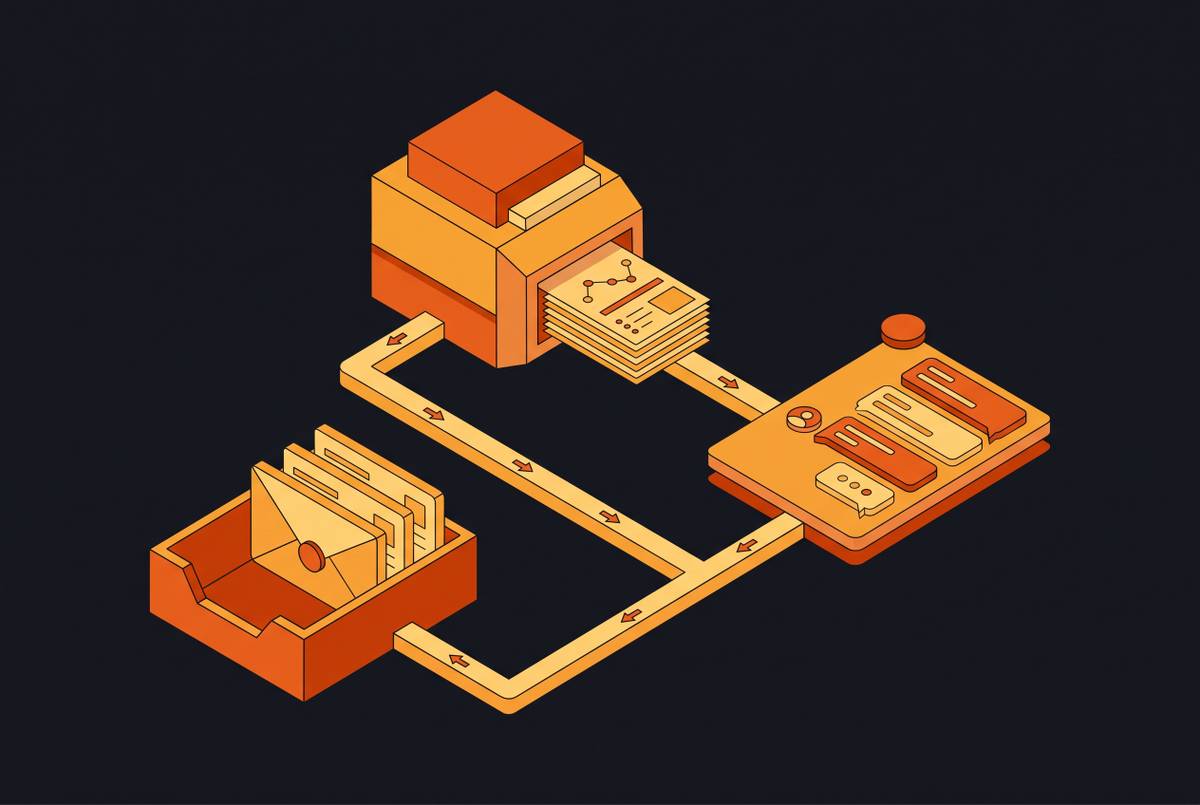
A team building an agent reaches a fork early: pipe model output to the user token by token, or wait for the complete response and send it all at once. That choice looks like a flag in an API call, but it isn't. Streaming and batch delivery are not two settings that trade latency for throughput on an otherwise identical system. Each one reshapes how context enters the pipeline, what state downstream consumers receive, and what operational infrastructure the team ends up responsible for running. Most teams pick streaming because it feels more responsive, or stay on batch because it's already wired up, and neither path involves the kind of deliberate reasoning the decision actually calls for. The data an agent reasons over grows stale on the input side, and whatever consumes the agent's response receives partial or complete state on the output side. This piece walks through both halves as one connected design problem, because treating them separately is how teams end up with an architecture nobody chose on purpose.
How batch data delivery breaks agent reasoning
Agents act on data at machine speed, and that single fact changes everything about how staleness behaves. A human analyst looking at a dashboard that's six hours old tolerates the delay because the analyst is the slowest part of the loop anyway. An agent making autonomous decisions continuously has no such check built in. It inherits the full cost of stale data on every single call, with nobody in the loop to catch the mismatch before an action gets taken.
IEEE Techblog documents five failure modes in network operations AI, and all five trace back to this same root: a data pipeline built for dashboards and reports, not for a system that acts on what it reads. Memory gaps follow a related logic. Coordination failure happens when several agents pull from the same batch-sourced store and end up with different pictures of the same reality, producing actions that conflict with each other.
The scale of the lag involved is not trivial. Fivetran's batch sync delivers data with a lag between one and sixty minutes depending on plan tier, with most plans running somewhere in the five-to-sixty-minute range, while streaming CDC delivers every database change with sub-second latency, typically under one second end to end, so the fix is replacing the ingestion layer with a streaming event log: agents need ordered event history, not just a fresher snapshot, to do the kind of pattern detection across time that batch snapshots make structurally impossible.
Time to First Token in multi-step agents
Time to First Token measures the interval between sending a request to a model and the first generated token reaching the client. It's the number that corresponds most directly to what a user perceives as responsiveness. In a single-turn chatbot exchange, TTFT tells you most of what you need to know about perceived speed. In a multi-step agent loop, it tells you much less, because the cost compounds.
Consider a planner-executor-critic loop, three sequential calls to a model, each one waiting on the one before it. Each step inherits its own TTFT, and those costs stack. The latency budget available for output delivery gets tighter as a system matures and its retrieval index grows, not looser.
Voice agents make this constraint impossible to ignore. Users expect the speech-to-text layer to run in roughly 300 milliseconds, and they expect the full round trip, from speech detection through the model's response to synthesized audio, to land under something like 800 milliseconds to a second. TTFT in this setting isn't a UX nicety, it's the measure of how much of an agent's multi-step work the user can actually perceive as happening. Streaming is the mechanism that keeps that number bounded no matter how many sequential steps sit behind the scenes.
Streaming output: partial state, consistency, and the output validation window
None of this makes streaming a free upgrade. Sending tokens to a downstream consumer before the full response has been validated hands that consumer partial, potentially inconsistent state, a category of failure that batch delivery simply doesn't produce, because batch only ever releases something once it's whole. An agent that's been granted more permissions than it needs and streams partial tool-call results to another system downstream isn't committing a classic access-control bug in the way an SQL injection is a classic access-control bug. The outcome, though, can land in the same place: a downstream system acting on something that was never meant to be acted on in its unfinished form.
Agentic streaming is interrupted by nature. A reasoning loop has to pause mid-stream to call a tool and wait for the result. Anyone who has watched a partial, unvalidated output cause a downstream mess has good reason to treat streaming as a trade, not an upgrade.
RAGO's per-phase batching policy
Which delivery mode fits each phase of that pipeline is the real question, and the answer changes from one phase to the next even inside a single request. RAGO, a serving optimization framework for retrieval-augmented generation, makes this concrete. It assigns a different batching policy to each phase based on what that phase actually needs: the rerank and prefix phases run with a batch size of one to keep latency down, while the decoding phase runs with a much larger batch size to push throughput up. Applying one mode across the whole pipeline gives up either freshness or throughput somewhere, because no single batch size serves both goals at once.
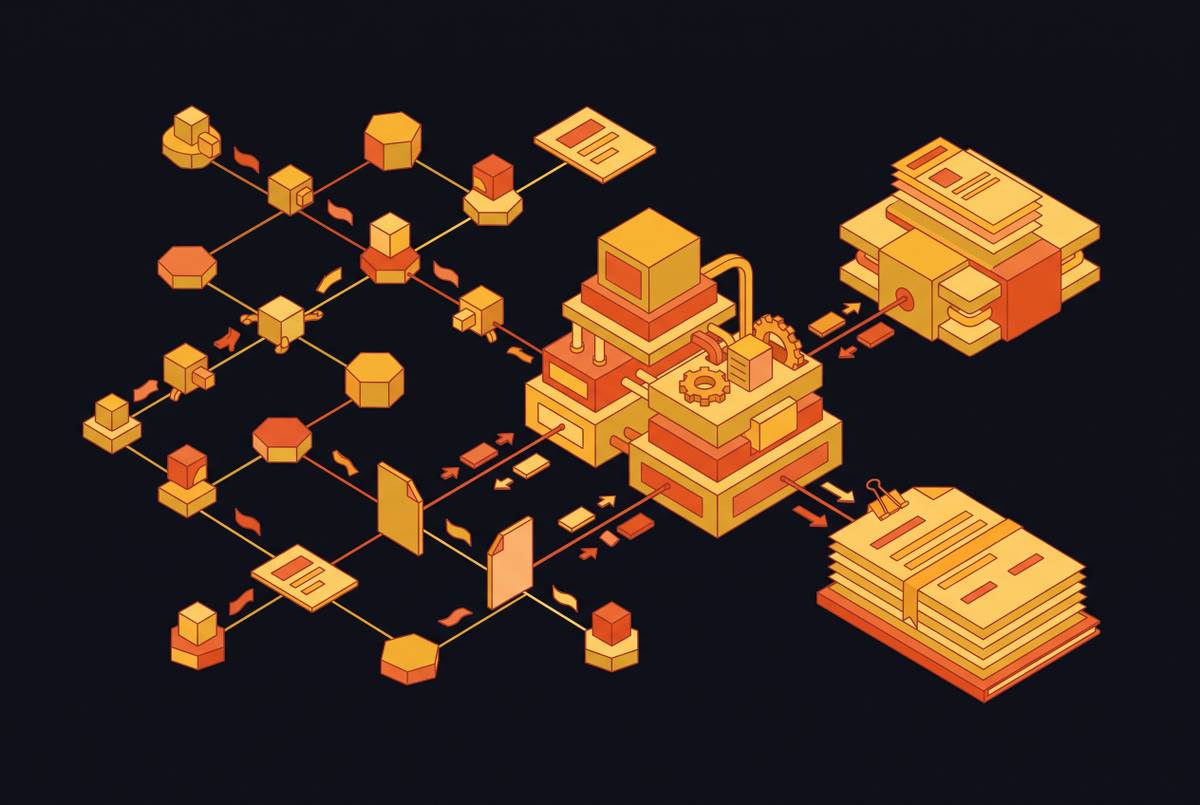
This same logic shows up at the inference engine level through continuous batching, used by serving frameworks including vLLM, TGI, SGLang, and TensorRT-LLM. The broader hybrid pattern extends past inference, too: persist the canonical record of events in a durable log, stream compact notifications or state deltas out to whatever's watching live, and run the heavier work, reconciliation, verification, training, in batch. Each layer runs in the mode that suits its job rather than inheriting whatever mode the rest of the system happens to use.
None of this follows from whether a system calls itself agentic. An LLM classification step can run asynchronously with no one waiting on it, while a deterministic inventory update sitting right next to it in the same pipeline may need to notify something immediately. The mode a given step should run in follows from that step's own staleness cost and what its consumers actually require, not from a label attached to the system as a whole.
KV cache reuse, speculative decoding, and the optimizations that change the streaming versus batch calculus
Several infrastructure changes have shifted what streaming actually costs. Some of the intuitions teams formed about the streaming-versus-batch trade-off no longer hold as firmly as they once did. KV cache reuse is the clearest example. Anthropic reports latency reductions of up to 85% for long prompts using this approach, with cache entries held for five minutes by default, or an hour with an opt-in extended time-to-live. Some of the latency win that teams expected to get from streaming can now come from the input side instead, through caching, and that changes the calculation for any workload where the system prompt accounts for most of the latency.
Speculative decoding attacks the tail end of tool-calling agents, where a small number of slow tool calls account for most of the delay. Batch delivery hides it inside the overall wait, but it doesn't make the underlying delay go away.
The interfaces available to build on have moved in step with this. The OpenAI Realtime API and the Gemini Live API both support streaming on the input side, to cut TTFT, and on the output side, to surface partial responses before the full one is ready. Open-source serving frameworks added efficient streaming input processing during 2026 as well. A team designing how its agents talk to each other should treat SSE as the default transport to build against for the near term.
Web knowledge retrieval and output delivery mode
When an agent reaches out to the live web mid-chain, the latency and quality of that retrieval call become part of the output delivery budget whether anyone accounted for it or not. It's easy to treat retrieval as a separate concern from how output gets delivered, but structurally the two are the same trade-off. A web search call introduces a dependency that, inside a streaming agent, becomes a pause in the middle of the stream. That pause has to be signaled to whoever's on the other end, or they read the silence as the system failing. The tail latency of the retrieval layer directly decides whether streaming output still feels coherent to the person watching it arrive.
Raw search results come packed with ads, navigation chrome, and markup that has nothing to do with the content a model needs, and all of that has to be stripped out before the result is usable in context. Production systems built specifically to serve AI agents with live web content are designed around streaming event infrastructure instead of batch snapshots, building freshness into the reasoning pipeline from the start, instead of adapting human-facing search results after the fact. For any RAG pipeline grounding itself on live web content, whether the retrieval system hands back shallow snippets that still need work or clean, structured content ready for the model determines how much latency and inconsistency gets injected right at the grounding step. Streaming heavy-hitter filtering, keeping only the document embeddings most relevant to a given query as data arrives and dropping the rest, can cut the search space and index size substantially in streaming RAG setups, requiring a retrieval system that can produce embeddings and similarity scores as data streams in. Teams building streaming agents with real-time web grounding should judge a retrieval layer on three things: latency at the 90th percentile rather than the median, since the tail is what breaks a stream; how clean the content is for a model to consume; and whether the system was built for machine consumers in the first place or adapted from human-facing search, a distinction Seltz, a web knowledge API purpose-built for AI agents and RAG pipelines, is designed around from the ground up. All three decide whether the output a user sees actually holds together as it streams.
A decision framework for choosing delivery mode by workflow step
The right way to decide on delivery mode is step by step, not system-wide: each piece of a workflow carries its own staleness cost, its own type of consumer, its own consistency requirements, and its own operational overhead, and a mode should get assigned based on that step's own profile rather than inherited from whatever the rest of the pipeline happens to use. A step points toward streaming when a live participant, a user, an operator, or another agent downstream, can still act within the latency window and would be hurt by acting on stale state; when the consumer renders output progressively, such as text appearing on screen or audio feeding into speech synthesis, where perceived latency is the main thing being measured; when the step sits inside a voice or real-time interaction where a delay of more than a few seconds reads as the system breaking; or when the underlying data changes continuously and the gap between old and new state carries real consequence, as with fraud signals, network telemetry, or live inventory positions. A step points toward batch when its output only makes sense consumed whole, such as a complete document, a finished feature set, or a reconciliation report, where correctness depends on having everything rather than part of it; when the workload is cost-sensitive and doesn't need to run immediately, since batch API pricing tiers offer real cost savings for high-volume jobs that aren't time-critical; when replayability and auditability matter, since batch produces deterministic output that can be inspected and reproduced in a way streaming generally can't; or when the team doesn't yet have the operational capacity to handle per-stream permission checks, log retention for replay, and joins that have to happen outside the destination warehouse. A hybrid pattern is the right call when the live path and the system of record are doing genuinely different jobs, streaming a compact notification that something changed while persisting the full canonical event in a durable log and reconciling the two in batch, or when a pipeline has phases with meaningfully different latency profiles, the way RAGO shows that the right batch size for a rerank phase has nothing to do with the right batch size for decoding. Before adding any new streaming dependency, a team should be able to answer three questions: what's an acceptable delay for this step, who gets hurt if the data is stale, and who's going to own the new event path once it exists. A team that can't answer those three isn't ready to stream that step yet, no matter how modern the move feels. Delivery mode choices should get checked against service-level objectives and actual failure tests, not against a sense of what an agentic system is supposed to look like. The step's real latency tolerance and its consumer's real requirements decide the right mode. For a team ready to act on this, the place to start is simple: pick the single highest-value agent in production, trace its pipeline phase by phase against this framework, convert the one or two steps that are clearly mismatched, and measure what changes before touching anything else.